A beloved tune during the holiday season is “The Christmas Song”. It was sung by some of the greats: Mel Torme, Nat King Cole, Bing Crosby and Perry Como. And even more recently by Christina Aguilera and Michael Buble. “Chestnuts roasting on an open fire. Jack Frost nipping at your nose.” Wait. Who is this Jack Frost character? And why is he nipping at our noses? Is he the one that leaves the icy, feathery, pattern on the ground when we get the first near-freezing temperatures of the autumn season? In this week’s Meteo Monday, we are talking about frost! We will explore the history of the mythical nose-nipper and discuss how frost REALLY forms!
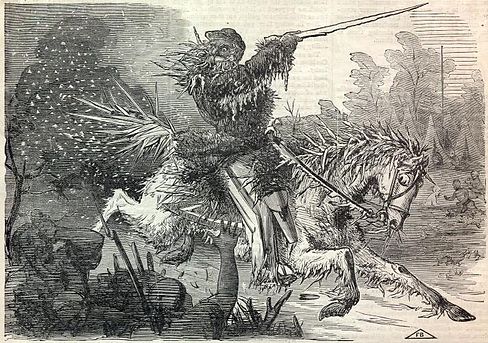
Jack Frost, much like his counterpart Old Man Winter, is a personification of wintry weather. He is often depicted as a mischievous character that brings in the cold and with that, we get frost, snow, and freezing temperatures. Jack Frost first made his appearance in English Literature in the 1700s. The book “Round About Our Coal Fire” or “Christmas Entertainments” was published in 1734. It is here that we see one of the first references of Jack Frost. “This time of year being cold and frosty generally speaking, or when Jack Frost commonly takes us by the nose…” From that point on, the frigid fellow has made an appearance in many books, articles, comics, cartoons, songs, television shows, and movies.
Now, let’s take a look at what frost actually is and how it forms. Per the National Weather Service (NWS) Glossary, frost is described as “the formation of thin ice crystals on the ground or other surfaces in the form of scales, needles, feathers, or fans”.
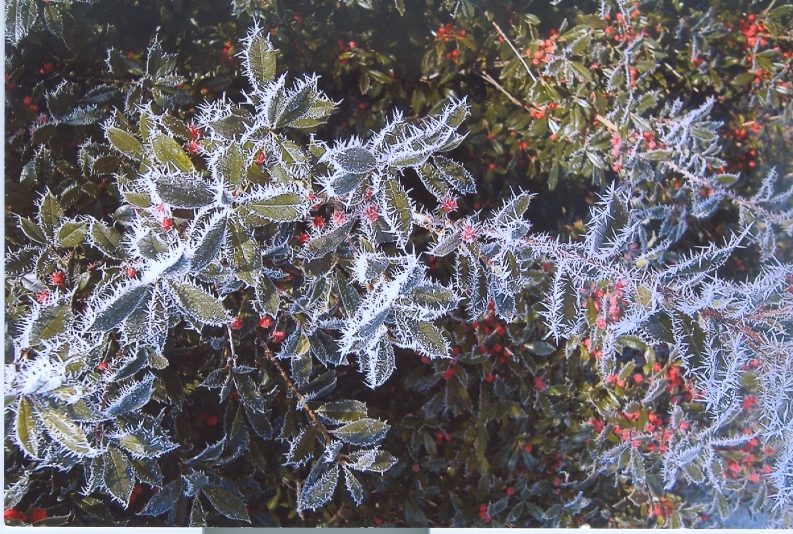
How do you know when it’ll be a frosty morning? It all comes down to the dew point. Dew point is the way you measure atmospheric moisture. It is the temperature to which the air must be cooled, to reach saturation. This is how you get dew. If this happens with surface temperatures below freezing, but the temperature within 4-5 feet of the ground is above freezing, the dew freezes on contact. And thus you have frost. Just because the surface temperature is below freezing doesn’t mean you’ll get frost. The temperature must fall to the dew point. Frost typically occurs under a clear sky, with light winds.
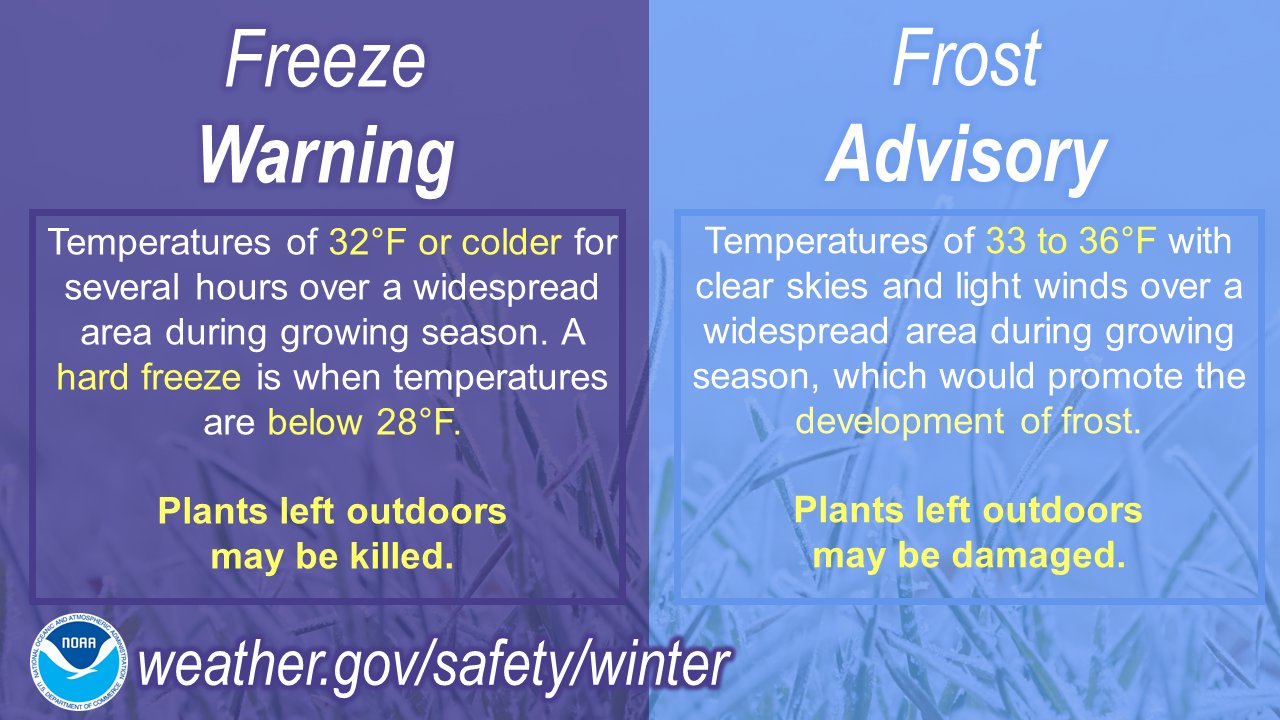
Frost can damage sensitive plants and crops. During the growing season (which varies across the country), the NWS will issue frost advisories if a widespread frost is expected across the area. A frost advisory will be issued when air temperatures are between 33-36℉. If the temperature is expected to drop below freezing, during the growing season, a freeze warning will be issued instead.
Local topography can also play a role in frost formation. Cold air is heavier than warm air, which will allow it “sink” down into valleys. Valleys will be cooler than the surrounding hill-tops, and therefore frost would be more likely to occur in the valley.
Sources
https://www.weather.gov/arx/why_frost
https://www.weather.gov/ctp/wwaCriteria
https://w1.weather.gov/glossary/index.php?word=Frost
https://writinginmargins.weebly.com/home/a-brief-history-of-jack-frost
https://en.wikipedia.org/wiki/Jack_Frosthttps://w1.weather.gov/glossary/index.php?word=Dew+Point