It is that time of the week again, Meteo Monday! In this week’s edition, we are going to take a look at winter precipitation types. Have you ever wondered what the difference is between sleet and freezing rain? Have you ever stepped outside and observed what look like Dippin’ Dots ice cream on the ground? Different layers of warm and cold air between the clouds determine the type of precipitation that reaches the ground.

Snow
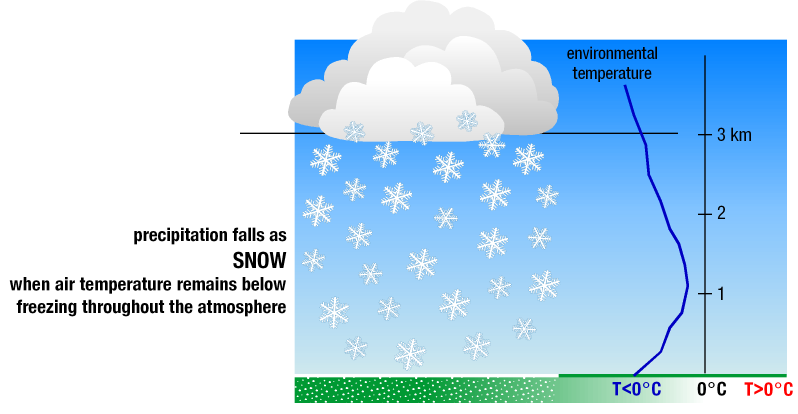
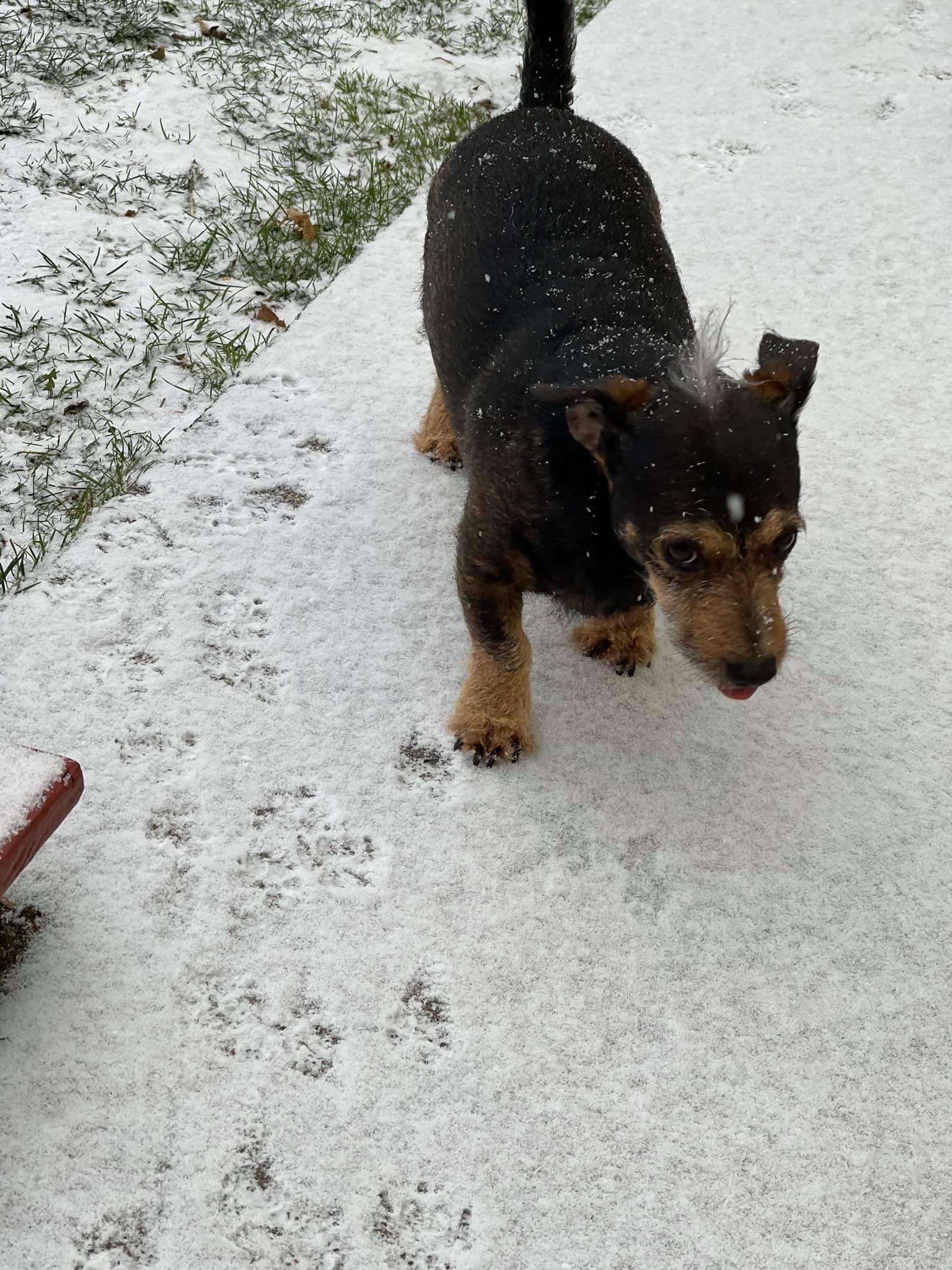
Most precipitation that forms in winter starts as snow because the top layer of the storm is usually cold enough to create snowflakes. Snowflakes are collections of ice crystals that cling to each other. If the air temperature remains below freezing to the ground, you will get snow.
Sleet
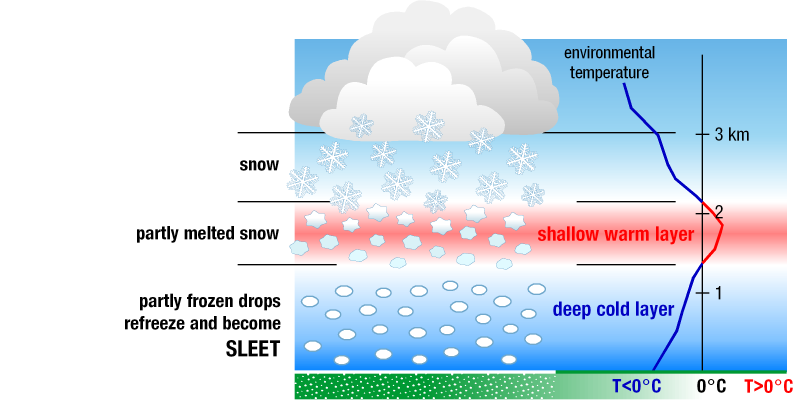
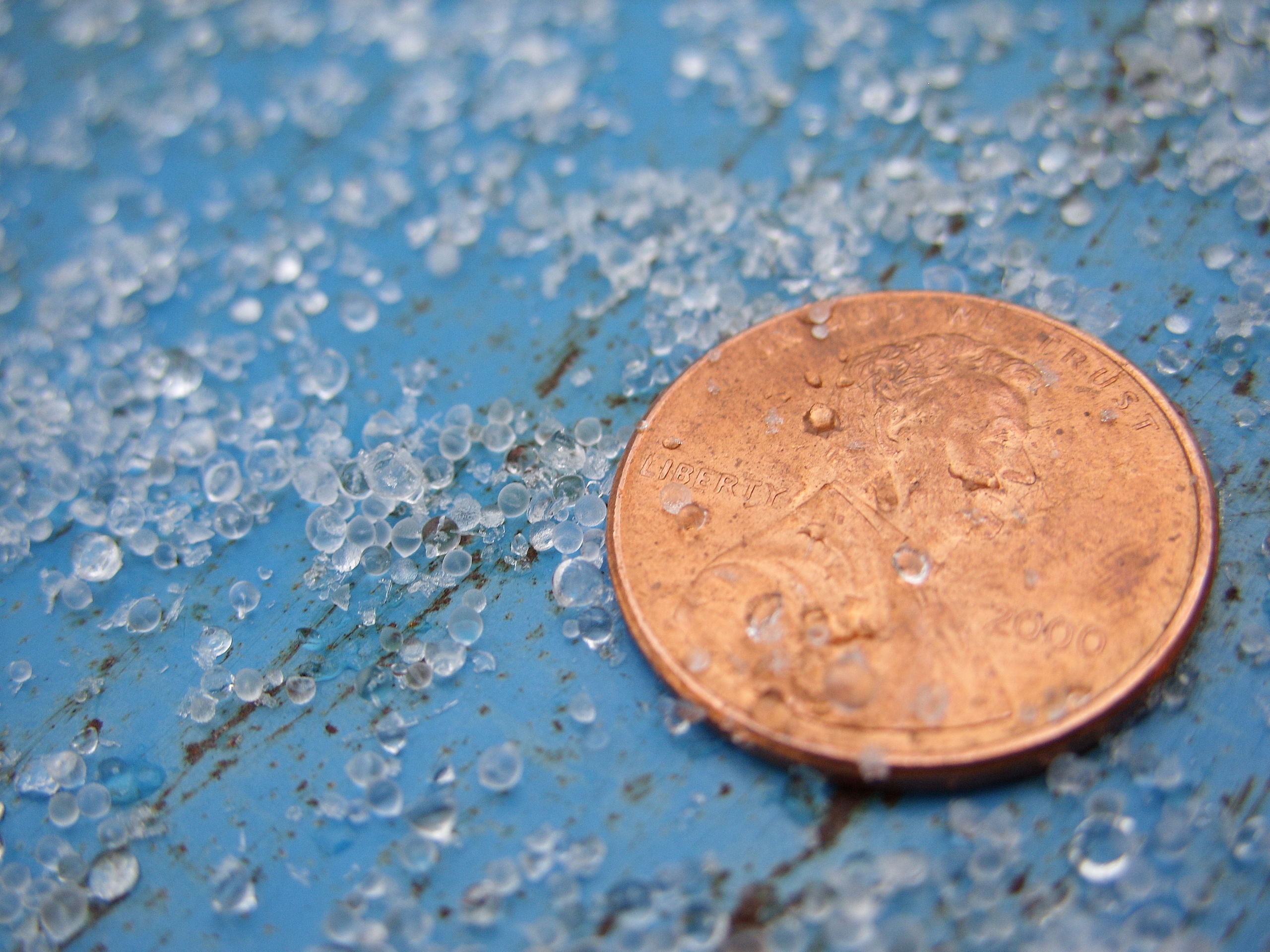
Sleet forms when you have snow that falls through a shallow warm layer of the atmosphere. As it falls through this layer, it starts to melt. It then falls through a cold layer at the surface, where it refreezes. Sleet is the tiny ice pellets that fall and bounce upon impact. Some people think that sleet is the same as hail. However, this is not true. They may look similar, but sleet is caused by snow melting and refreezing. Hail is generated in a thunderstorm.
Graupel
Perhaps graupel is a type of wintry precipitation that may be new to you. Graupel is formed by convection. In meteorology, convection is defined as “…vertical transport of heat and moisture in the atmosphere, especially by updrafts and downdrafts in an unstable atmosphere. The terms “convection” and “thunderstorms” often are used interchangeably, although thunderstorms are only one form of convection.” Graupel can be thought of as a hybrid between sleet and hail. These Dippin’ Dots from the sky occur when there is very cold air in the upper parts of a shower or squall, and the surface is just above freezing. Because graupel occurs with convection, lightning is often seen.

Was recording the heavy graupel for my Snapchat when in captured lightning on video, and a pretty loud crack of thunder. Thunder-graupel in Altoona!!!! #PAwx @NWSStateCollege @JoeMurgo pic.twitter.com/hgZLNCaNa9
— Nick Wilkes (@nickwilkeswx) April 10, 2020
Freezing Rain
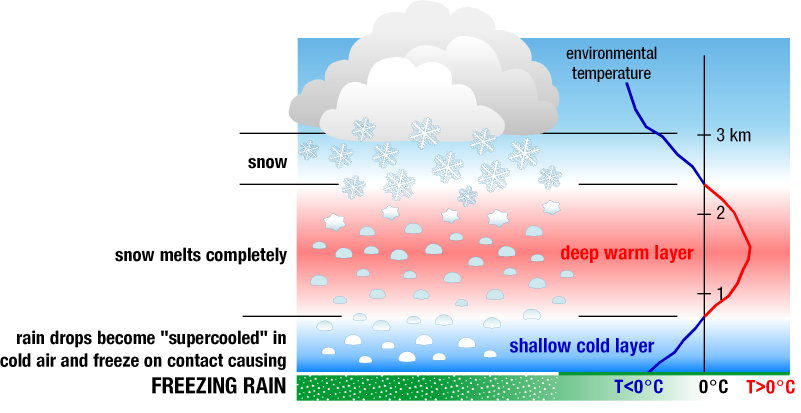
When plain ole’ rain freezes upon contact with the ground, that is freezing rain. Snow falls through a deep warm layer of the atmosphere, turning to rain; however, if the surface temperatures are at or below freezing, the rain doesn’t have time to freeze into pellets. Anything that is at or below freezing, such as trees, powerlines, or even the ground, freeze over instantly as rain touches them. Accumulating ice can weigh down tree branches and powerlines, which leads to power outages.

Sources: