https://youtu.be/xrfEUunpS38
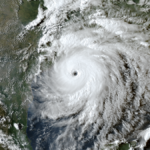
This satellite animation is from NOAA’s GOES-16 (GOES East) satellite and runs from May 13 through November 18, 2020. Video via NOAA.
It was the tropical season that seemed to never end! The 2020 Atlantic hurricane season was extremely active and several records were set. Here are just a few:
- There were 30 named storms, from Arthur to Iota. This is the most storms on record. Previously, the record was 28 set in 2005.
- Thirteen hurricanes formed and six were major hurricanes. This is the second-highest number of hurricanes on record.
- For the sixth year in a row, a named system formed BEFORE the official start of hurricane season (June 1). This was Arthur on May 16.
- Twelve storms made landfall in the continental US, five of which came in across parts of Louisiana. Previous record was nine set in 1916.
- Only the second time in history that the Greek alphabet was used.
- A record nine named storms formed from May through July.

Overview of the 12 Landfalling Storms in the Continental U.S.
Tropical Storm Bertha

Bertha was a pre-season tropical system. It formed off the coast of the Southeastern US on May 27, eight days after Tropical Storm Arthur dissipated near Bermuda. It should be noted that Arthur did bring some tropical storm force winds to the Outer Banks of North Carolina but did not officially make landfall.
Peak intensity of Bertha was at 50 mph when it was centered 30 miles ESE of Charleston, SC. Landfall occurred on May 27 near the Isle of Palms, SC. The storm weakened quickly and dissipated over the Ohio Valley on May 28. Main impact from Bertha was heavy rain across the eastern portions of South Carolina. A general 2-4 inches was reported with locally higher amounts. Per the National Hurricane Center, “Much higher rainfall amounts of up to 15 inches occurred across portions of southeastern Florida in association with the precursor disturbance of Bertha.”
Tropical Storm Cristobal
On June 1, a tropical depression formed in the Bay of Campeche. The depression formed from the remnants of a Pacific storm, Tropical Storm Amanda. On June 2, the system had strengthened and Tropical Storm Cristobal was born. The first landfall of Cristobal occurred on June 3 in the state of Campeche, Mexico. Maximum winds were estimated at 60 mph. The storm weakened over this area and then strengthened again as it lifted back into the Gulf of Mexico. A second landfall occurred on June 7 along the coast of southeast Louisiana between the mouth of the Mississippi River and Grand Isle with winds near the center at 50 mph. The storm weakened and moved north through the Mississippi Valley Region and dissipated on June 13.
Cristobal is the earliest third named storm on record in the Atlantic Basin. Per the National Weather Service (NWS), on June 9, Cristobal (which had weakened to a tropical depression) moved through parts of Wisconsin. This was the first time a tropical depression had ever crossed into the state. Per NWS Milwaukee, “Not only was Cristobal Wisconsin’s first tropical depression, but its path was the furthest northwest ever taken by a tropical system since the beginning of records.”

- Significant flooding occurred across the Yucatan Peninsula.
- In Canada, nearly 300,000 people were without power due to the high winds. And several tornadoes were confirmed including an EF-2, near Mary Lake.
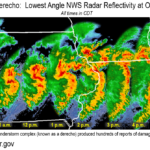
- The remnants of Cristobal produced a derecho across IN, MI, OH, PA and NY. There was widespread wind damage from the tropical cyclone-induced derecho, and even an EF-2 tornado in Beaver County, PA.
- Green Bay, WI experienced the lowest pressure on record at 986 MB.
Tropical Storm Fay
During the early parts of July, an area of low pressure developed over the Northern Gulf of Mexico. It moved across the Florida Panhandle and through the Southeastern U.S. and pressed off the coast of North Carolina. On July 9, reconnaissance aircraft determined that Tropical Storm Fay had formed with maximum sustained winds of 45 mph. The storm moved north and made a landfall on July 10 NNE of Atlantic City, NJ. It quickly weakened into a post-tropical low and the last advisory from the NHC was at 5am EDT on July 11. This was the first tropical storm to make landfall in New Jersey since Irene in 2011. Fay was the earliest 6th named storm on record.
- Coastal flooding and minor storm surge battered the Delmarva Peninsula and NJ
- Flash flooding was reported across portions of eastern Pennsylvania.
- New York City subway stations were flooded.
- Six fatalities were caused due to rip currents in NJ, NY, and RI.
https://youtu.be/C61tt2F2aJ4
Hurricane Hanna
Hanna was the first land-falling hurricane of the historic 2020 season. It began as a tropical depression on July 24 with the center 385 miles ESE of Corpus Christi, TX. The depression strengthened to a tropical storm on July 24 and then intensified further and became a hurricane on July 25. The maximum winds with Hanna reached 90 mph just before making landfall at Padre Island, TX. A second landfall occurred in Kenedy County about 15 miles NNW of Port Mansfield.
- Widespread flash flooding occurred across southern TX.
- The Bob Hall Pier in Corpus Christi collapsed due to a combination of storm surge and high winds.
- The Texas State Aquarium was flooded due to storm surge.
- An EF-0 tornado damaged a hangar at the Brownsville/South Padre International Airport.
- Several streets flooded in Monterrey Mexico.
Our Warning Coordination Meteorologist took a trip with the Coast Guard to survey the damage along the Middle Texas coast. The powerful storm surge resulted in drastic beach erosion as well as severe damage to Bob Hall Pier. #Hanna #txwx pic.twitter.com/kdCJfxlAOM
— NWS Corpus Christi (@NWSCorpus) August 2, 2020
Hurricane Isaias
Isaias began as a tropical wave off the coast of Africa on July 23. It strengthened to a tropical storm seven days later and passed south of Puerto Rico and into the Dominican Republic. Isaias became a hurricane and made landfall on North Andros in the Bahamas with max winds of 80 mph. It weakened slightly and ran parallel along the Florida and Georgia Coasts as a tropical storm. It did strengthen back to hurricane status before making a landfall on Ocean Isle Beach, NC. Max winds were at 85 mph. The system raced up the east coast and dissipated on August 6.
Isaias spawned a rather large tornado outbreak. Over three dozen twisters were confirmed.

The strongest tornado of the outbreak occurred on August 4. It traveled 10 miles through parts of Bertie County, NC. The greatest intensity occurred south of Woodard. Peaks winds were estimated by the NWS to be 140-145 mph (EF-3). Several mobile homes and stick built houses were destroyed. Per the NWS, “It flattened seven single-wide and double-wide mobile homes, leaving unrecognizable bits of debris.” There were two fatalities and 14 injuries due to this tornado. This was the strongest tornado spawned by a tropical system since 2005.
https://www.youtube.com/watch?v=55PZFJPqYZc
A long-track tornado spawned by Isaias occurred in Delaware. It moved for 35.5 miles from near Rising Sun, through Dover, Smyrna, and Middletown, dissipating south of Glasgow. It was rated EF-2 with peak winds of 115 mph. This is the longest tornado path documented in Delaware since 1950. A 96 mph wind gust was measured by a DelDOT weather station north of Smyrna. EF-2 damage occurred near Middletown, several homes had roofs and partial wall loss. At least 12 homes were declared uninhabitable. The tornado also produced severe damage to trees and corn fields.

The strong winds from Isaias battered the Carolinas to New England causing widespread power outages. Per Con Edison, it was the second largest outage in its history.
#StormIsaias’s outage is the second largest in our long history. With 257,000 customers out surpassing Hurricane Irene; we are focused on safe restoration. Click the link for all the details: https://t.co/RCgS8w99Fu #poweringthrutogether pic.twitter.com/cJzUJP2H33
— Con Edison (@ConEdison) August 5, 2020
- $4.8 billion in damage.
- 3100 trees were knocked in Queens, NY.
- 148 mph wind gust was recorded on Mount Washington, the strongest gust ever recorded there in August.
- Widespread flooding in the Philadelphia area resulted in numerous water rescues.
Hurricane Laura

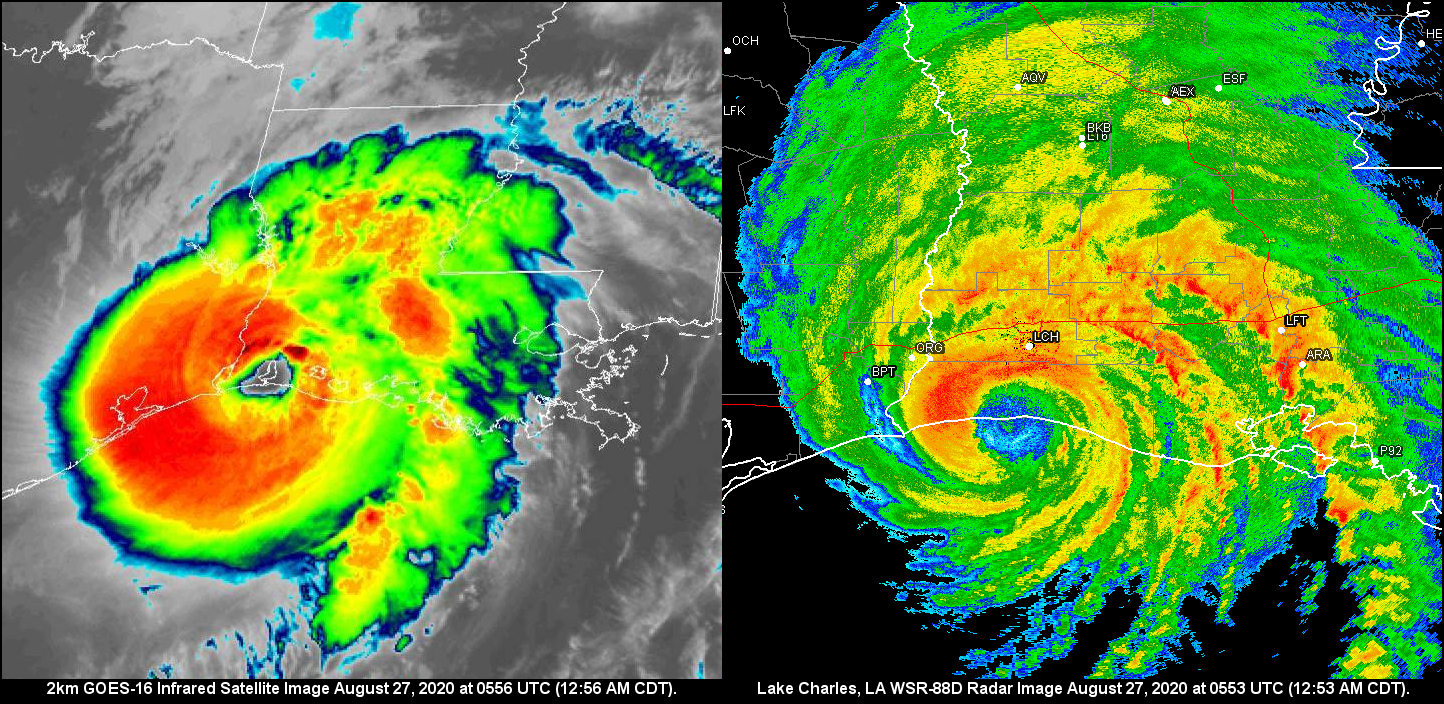
Laura was the first major hurricane of the 2020 season. It began as a tropical wave off the coast of Africa on August 16. It continued its trek east eventually becoming a tropical storm on August 21. It was the earliest twelfth named Atlantic storm on record. The center moved across the northern Lesser Antilles and south of Puerto Rico. A landfall occurred over Hispaniola and then Eastern Cuba on August 23-24. As Laura moved through the Gulf of Mexico, it began to strengthen and reached peak intensity of 150 mph on August 26 just south of the coastal areas of Southwest Louisiana. Major hurricane Laura made landfall at Cameron, LA around 1am CDT on August 27. It was the strongest hurricane to strike this area since records began in 1851.
- $19 Billion in damage
- First major hurricane to strike the US Mainland since Michael in October 2018.
- Major storm surge damage occurred along the Louisiana Coastline.
- 17 foot storm surge confirmed in Rutherford Beach, and Creole, LA.
- Extensive wind damage occurred to Lake Charles, LA with hundreds of buildings being heavily damaged or destroyed.
- Several tornadoes were confirmed across parts of AL, AR, MS and TN, including an EF-2 tornado that hit near Maynard, AR.
- The WSR-88 at NWS Lake Charles was destroyed.


Hurricane Marco
Marco was spawned from a tropical wave that made a trek through the Central Atlantic. It became a tropical depression on August 20 about 235 miles east of the Nicaragua-Honduras border. The system moved into the Northwest Caribbean, strengthened to a tropical storm and then quickly to a hurricane on August 22. It weakened in the Yucatan Channel then strengthened again to a Category 1 hurricane in the warm waters of the Gulf of Mexico on August 23. This occurred at the same time Laura was hitting Hispaniola and Cuba.
As Marco moved north toward the U.S. Coast, it encountered tremendous wind shear and was torn apart. A much weaker tropical storm Marco made landfall near the mouth of the Mississippi River on August 24.
- 11.81” of rain fell near Panama City FL
- Highest Observed wind gust occurred at Petit Bois Island, MS at 38 mph
Talking about a close call! Lightning struck uncomfortably close to lifeguards in Panama City Beach, FL. They were clearing the beach as Tropical Storm #Marco moved through. pic.twitter.com/a55qCtcyXV
— Pattrn (@pattrn) August 25, 2020
Yesterday in Panama City Beach, Florida! – Remnants of Hurricane Marco!
Permission: Shannon Meadows | 08-24-2020@WeatherBug pic.twitter.com/QQWUTH3vJm
— Live Storm Chasers (@Livestormchaser) August 25, 2020
Hurricane Sally
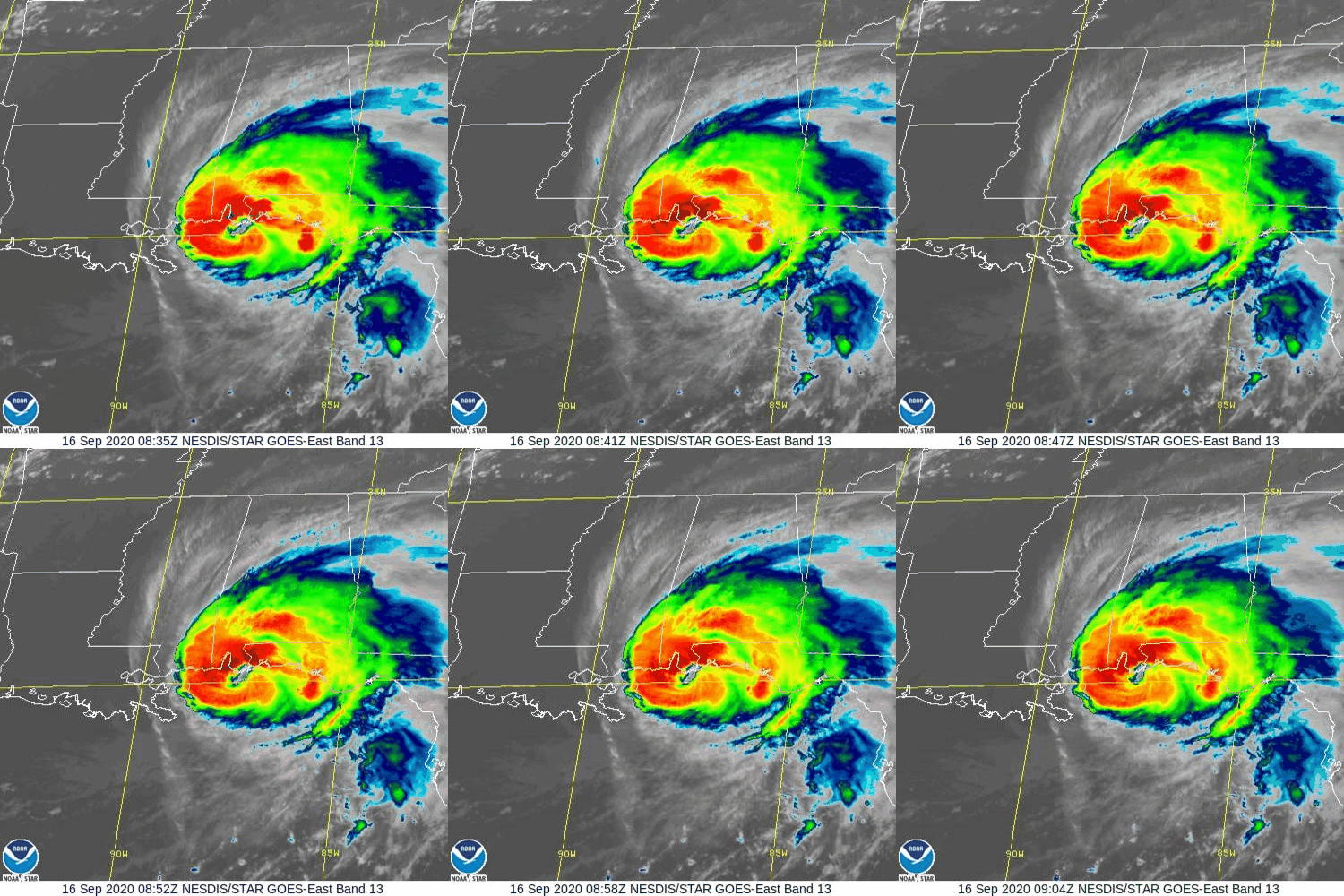
Sally was a September storm that had a big impact on the Gulf Coast region. It became a tropical depression on September 11. The depression made landfall at Key Biscayne, FL and then moved into the Gulf of Mexico and strengthened. Sally fluctuated in its intensity eventually peaking as a Category 2 storm with maximum winds of 105 mph as it made landfall near Gulf Shores, AL.
- $7.3 billion in damage.
- 36” of rain in Tiger Point FL.
- 121 mph wind gust recorded at Fort Morgan, AL.
- Heavy storm surge damage recorded along the Alabama Coastline.
- A crane fell onto the Pensacola Bay Bridge, destroying a portion of it.
- 22 barges in Pensacola Bay and two riverboat casinos in Mobile Bay broke loose from their moorings.
- Wind damage and flooding continued across Georgia and into the Carolinas.
NEW video from Navarre Park in Navarre, Florida as a result of Hurricane Sally!
Permission: LittlesLife&Laughter | ropp_christina – 09-16-2020@Weatherbug – Download the app today!#HurricaneSally2020 #Saly #HurricaneSally pic.twitter.com/qtFqxlDX7M
— Live Storm Chasers (@Livestormchaser) September 17, 2020
Watch: Drone footage shows damage to Three Mile Bridge in Pensacola after Hurricane Sally https://t.co/vwjHb17QTH pic.twitter.com/zzVd8vhj2q
— PNJ (@pnj) September 18, 2020
A pier in Orange Beach, Alabama is washed away as Hurricane Sally slams the Gulf Coast, with some areas already receiving up to 25 inches of rain. https://t.co/0XnlhdJpAB pic.twitter.com/OVDtamSnPl
— ABC News (@ABC) September 16, 2020
Uh, that’s a no from me 😳🐊 — HUGE alligator in Gulf Shores, Alabama displaced in a neighborhood from Hurricane Sally’s surge. 📸Tina Bennett @WGNOtv @HankAllenWX @BrookeLaizer_Wx #HurricaneSally pic.twitter.com/zXgcALvTHa
— Scot Pilié (@ScotPilie_Wx) September 16, 2020
Tropical Storm Beta
Tropical Storm Beta began as a disturbance in the Northeast Gulf of Mexico on September 10. It had a hard time getting its act together until Hurricane Sally moved into the Southeastern U.S. Once that happened, the wave became a depression on September 16 and then a minimal tropical storm on September 17. It meandered a bit then began a westerly movement toward Texas and a landfall occurred on September 21 near Matagorda Peninsula.
- Large waves destroyed part of a pier in Galveston, TX.
- Storm surge flooding inundated parts of Coastal Texas.
- 48 mph wind gust in Port Lavaca, TX.
- Flooding was reported across the Houston Metro area, with over 100 high-water rescues taking place in the city.
- The remnants procured a small severe weather event across the Carolinas on September 25. Baseball sized hail and damaging winds occurred, and an EF-0 tornado hit Myrtle Beach, SC.

Hurricane Delta
Delta first came on the scene on October 1 as a tropical wave over the Eastern Caribbean. The National Hurricane Center gave us the heads up that this system had the potential of becoming a cyclone on October 4 and it officially became a tropical storm on the 5th. Delta intensified quickly and on Oct 6 was already a Category 2 hurricane. Meteorologist Philip Klotzbach tweeted the following:
#Delta has intensified by 70 mph (from 40 mph to 110 mph) in its first 24 hours since becoming a named storm. This is the most intensification in a 24 hour period for an October Atlantic named storm since Wilma in 2005. #hurricane pic.twitter.com/Dc5EkZpFSj
— Philip Klotzbach (@philklotzbach) October 6, 2020
Delta continued to increase in intensity. At 1120am EDT, an update was submitted by the National Hurricane Center stating, “Data from a NOAA Hurricane Hunter aircraft indicate that Delta is continuing to rapidly strengthen. The maximum winds have increased to near 130 mph with higher gusts.” Delta was now a Category 4 storm 125 mile SW of Grand Cayman.
Delta encountered some shear and weakened to a Category 2 system as it made landfall in Mexico. It weakened slightly more over the Yucatan Peninsula and began to restrengthen in the Gulf of Mexico. It fluctuated in intensity as it moved toward the Gulf Coast and eventually crossed near Creole, LA with max winds of 100 mph.
- $2.9 Billion in damage.
- Made landfall just 12 miles east of where Hurricane Laura made landfall.
- 96 mph wind gust recorded at Lake Arthur, LA.
- Homes that were heavily damaged by Hurricane Laura were damaged again.
- Several tornadoes recorded across AL, GA, MS, NC, and SC.

Drone footage of terrible devastation east of Creole, Louisiana the morning after Hurricane #Delta. Much of this total destruction is from Hurricane Laura in August, with the flood waters from Delta surge and rainfall runoff. @RadarOmega_WX pic.twitter.com/hvbDrGjGsq
— Reed Timmer (@ReedTimmerAccu) October 12, 2020
NEW FOOTAGE: Check out some of the surge & wave highlights from Hurricane #Delta as seen from Cypremort Point, Louisiana. Later in the night, waves were over 20+ feet and were taller than the pier roofs before they even crested and slammed onshore! #LAwx pic.twitter.com/NJjdfEFEdT
— Aaron Rigsby (@AaronRigsbyOSC) October 11, 2020
Hurricane Zeta

Zeta had a similar track as Delta, moving out of the eastern Caribbean, clipping the Yucatan Peninsula and then moving right back into the Gulf of Mexico. This storm also had the Louisiana Coast in its sight. It made its approach to the coast on October 28 as a Category 2 hurricane. It was at peak intensity with winds of 110 mph when it made landfall in Cocodrie, LA. The system raced inland through the deep south and into Virginia. It turned toward New England and brought accumulating snow to the area.
- $3.5 Billion in damage
- 112 mph wind gust at Shell Beach, LA.
- Storm surge flooding affected Coastal Louisiana and Mississippi.
- Inland tropical storm warnings stretched across AL, GA, TN, SC NC into VA. Wind gusts as high as 80 mph produced widespread damage across these inland areas.
- Produced snow across New England, 6.5” recorded in Grafton, MA.
In the latest episode of the 2020 Hurricane Season: #Zeta's northern eyewall continues to fire off strong convective bursts over the newly-discovered Gulf of Mississippi.
A significant inland wind event is underway, with Tropical Storm Warnings all the way to southern Virginia. pic.twitter.com/IUAMTmj7nB
— Jake Carstens (@JakeCarstens) October 29, 2020
Photos taken in Chauvin, LA from my latest @DeSmogBlog report on #HurricaneZeta's aftermath: https://t.co/1uCyjGJ3MB. “One thing we’re finding is that tropical storms are much more likely to exhibit 'rapid intensification,” said @MichaelEMann while discussing Zeta's impact. pic.twitter.com/PfvXIhTLOR
— julie dermansky (@jsdart) November 1, 2020
Hurricane Eta

This hurricane had one of the most unusual paths of the entire 2020 season. The path began as most did in the Eastern Caribbean on Halloween. It strengthened rapidly and was a Category 4 hurricane when it made landfall Nicaragua. This was the first hurricane of the season to hit the country. The strongest of the season, Hurricane Iota, devastated Nicaragua only two weeks after this one.
After slowly pressing through parts of Central America, a much weaker Eta moved back into the Caribbean and raced toward Cuba on November 7. The path became very erratic over the next several days. It moved through the Florida Keys and then stalled in the southern parts of the Gulf of Mexico. The storm fluctuated in intensity this entire time. It finally picked a direction and moved toward the Southeastern U.S. Landfall as a tropical storm occurred near Cedar Key, FL on November 12.
- $1.5 Billion in damage
- 53 mph wind gust at Dania Beach, FL.
- 15.79” of rain fell in Miramar, FL.
- Major flooding reported across Florida
- Florida’s largest COVID-19 testing site, in Miami Gardens, was flooded.
- 140 people were rescued at a school in Charlotte NC, when floodwaters reached the first-floor windows.
▶️ Tropical Storm Eta brought heavy rains to North Carolina, flooding an area of Charlotte and leaving cars stranded, Thursday.
👉 Tropical Storm Eta Makes Second Florida Landfall https://t.co/bLiX6rupWz pic.twitter.com/PYfDWxx7qQ
— The Voice of America (@VOANews) November 13, 2020
Tropical storm Eta sent a 3.69 ft. storm surge into St. Pete. These are ‘before’ and ‘after’ photos of Coffee Pot Bayou. @BN9 pic.twitter.com/Fi0g8IVeOQ
— Josh Rojas (@JoshRojasBN9) November 16, 2020
Note: All damage costs listed above for the United States only.
Sources
NOAA Overview of the 2020 Hurricane Season
National Hurricane Center Archive
2020 Hurricane Season via Wikipedia
NOAA: Billion-Dollar Weather and Climate Disasters: Events